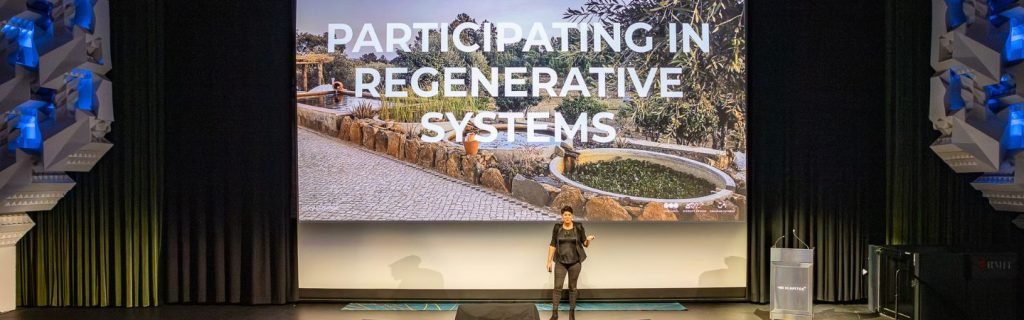
The RSA (The royal society for arts, manufactures and commerce), RMIT’s Regenerative Futures Institute and Planetary Civics Inquiry are bringing together some thinkers to launch the RMIT × RSA Living University Paper, a provocation about the role of higher education in an era of compounding complexity.
https://www.thersa.org/reports/living-university/
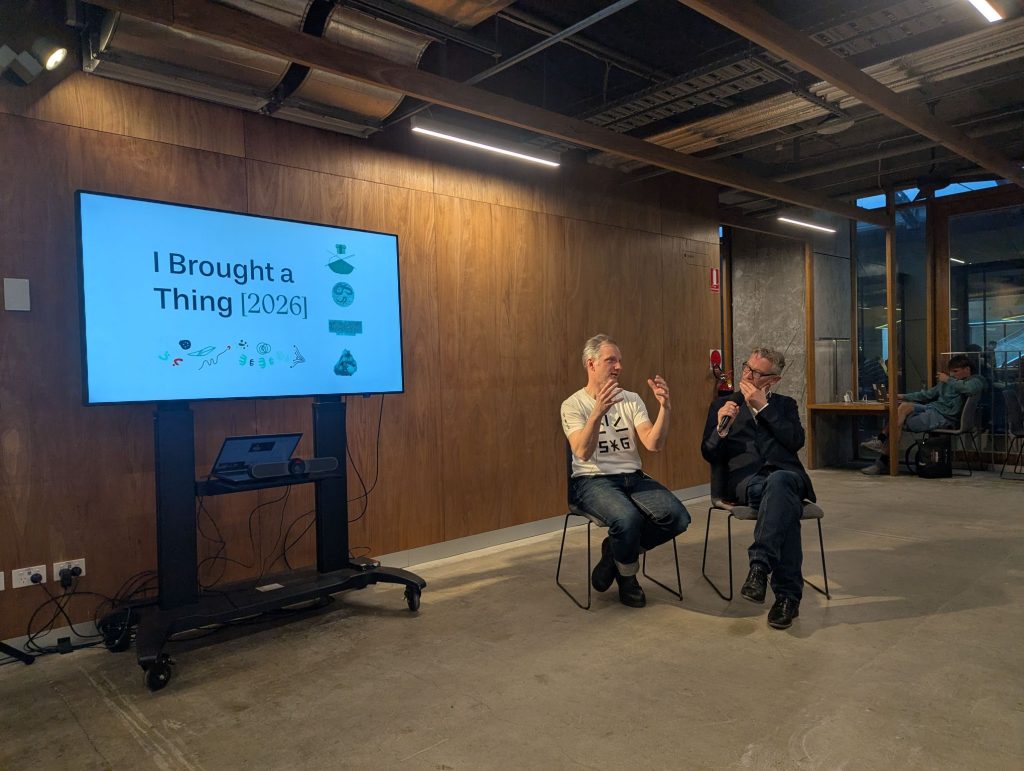
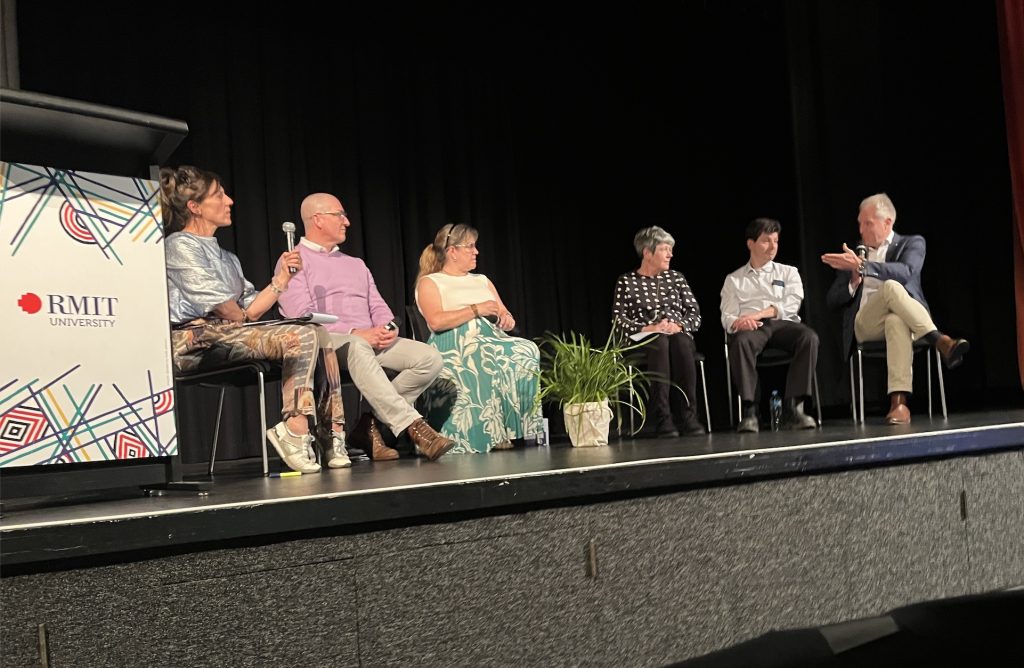
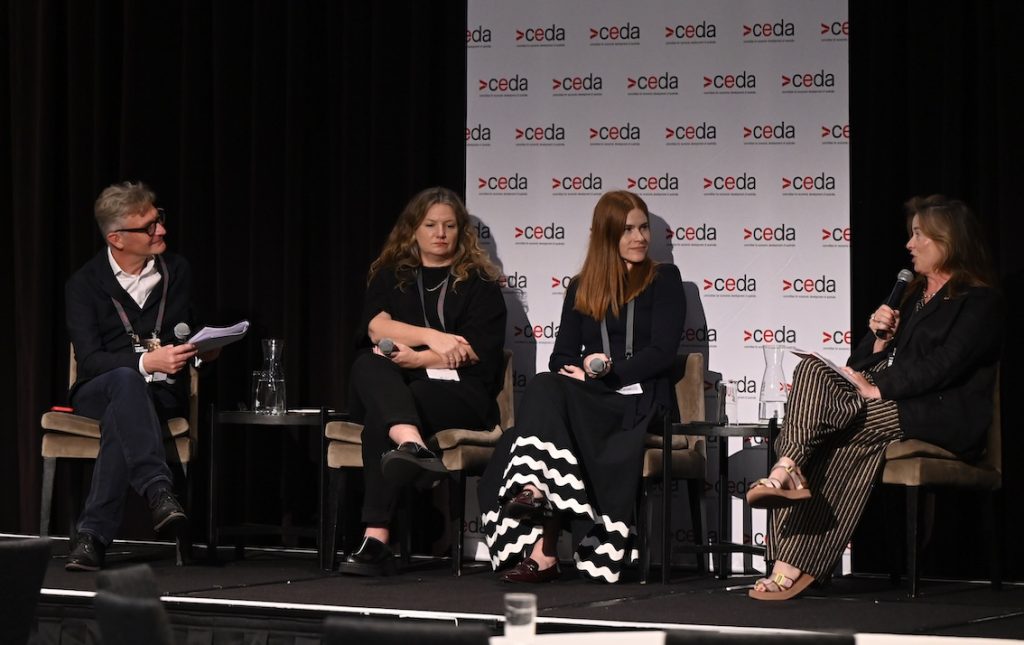
Hosted by Naomi Stead (College of Design and Social Context) and myself, the event will open with a fireside chat between Philipa Duthie (Global Manager, Oceania and Asia, The RSA) and Daniel Christian Wahl (author of Designing Regenerative Cultures), before a panel chaired by Wendy Steele (Professor of Sustainability and Urban Policy) holds the question from multiple angles, environmental, social, political, cultural, historical, and future imaginaries.
Joining the panel: Andrea Siodmok OBE (Dean of School of Design, RMIT), Professor Gary Thomas Thomas (Pro Vice-Chancellor Indigenous Education, RMIT), Professor Shaista Shameem (Vice-Chancellor, University of Fiji), and Josie Warden (Head of Regenerative Design, Subak).
Thursday 30 April, 4:30pm
RMIT Building 42, 36–40 Cardigan St, Carlton
Register to be in person: https://events.rmit.edu.au/event/84d5c499-135f-4fd1-8882-d9faf8deae2a/regProcessStep1?rp=3789685f-c681-4ddb-a807-39727a370e97
Register to watch live online: https://www.rmit.edu.au/events/2026/april/rmit-living-university-paper-launch
If universities are to be agents of regenerative futures rather than instruments of the status quo, the work starts with asking hard questions about what they are for. Come and ask them with us.
A little more on the report…
The Living University whitepaper is the culmination of a 12 month-long inquiry conducted in partnership with RMIT University in Australia. The report explores how universities can leverage their unique role in society to become catalysts of transformational change and support the transition to a more just, sustainable future.
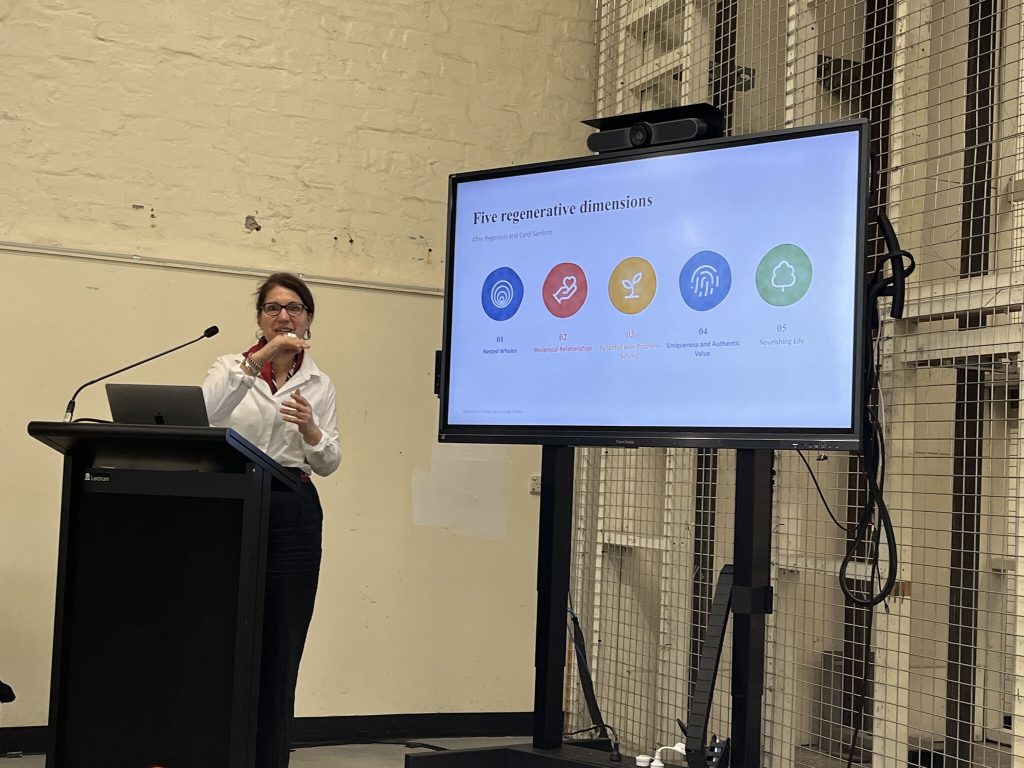
In our research, we identified five ways the university sector can support wider systems change toward human and planetary flourishing:
- Invest in regenerative learning: Embed ecological literacy into curricula across all disciplines, so that learners have a good grounding in Earth Systems Science and understand the interdependent relationship between humans and our planet.
- Prioritise place-based approaches: Tailor research and innovation programmes to the specific needs of the bioregion in which the university is situated and champion initiatives that deepen place-connections and engagement with local landscapes.
- Support cultural and academic pluralism: Encourage transdisciplinary working and create spaces for researchers from diverse backgrounds and perspectives (including Indigenous knowledge-holders) to collectively explore complex challenges.
- Foster partnerships between institutions and sectors: Encourage cross-institutional learning and collaboration through funding for research partnerships; build multi-sector coalitions that engage local actors working to address common issues.
- Invest in a regenerative learning ecosystem: Support initiatives that build capacity for regenerative understanding, for example through regional ecology centres or living learning labs.
The paper argues that universities, as hubs of learning, research and engagement, have both the responsibility and the capacity to drive the transition toward regenerative futures. But doing so requires more than incremental change. It calls for a fundamental rethinking of how universities relate to place, to knowledge, to community, and to the living systems they are embedded within.
Drawing on Indigenous knowledge traditions, living systems thinking, and examples from institutions around the world, the paper identifies four qualities that define a Living University. It must be a catalyst for place-based regeneration, developing deep knowledge of local ecologies and communities rather than defaulting to the globalised, one-size-fits-all logic that dominates much of contemporary higher education. It must be a hub for relationality, actively breaking down disciplinary silos and fostering the transdisciplinary, complexity-aware thinking that the challenges of our time demand. It must function as an evolutionary space, creating room for experimentation, divergent thinking, and the ability to sit with uncertainty rather than rushing to solutions. And it must become a holder of complexity, using its convening power and social licence to bring together plural voices, including more-than-human ones, in service of genuine, holistic sense-making.
The paper is also a direct reflection of work already underway at RMIT. The Regenerative Futures Institute is cited as an example of investment in a regenerative learning ecosystem, a focal point for new ways of learning, teaching, collaboration and research that takes the Living University seriously as a practical project, not just a concept. The four qualities the paper describes map closely onto RFI’s own structure: the Fellows network spanning all RMIT colleges embodies the relational ambition; the pilot Minor and Regenerative Fundamentals curriculum are early experiments in evolutionary, place-based pedagogy; and RFI’s growing role as a convener of researchers, practitioners and communities speaks directly to the complexity-holding function the paper calls for.
The Living University is both a provocation and a roadmap, and its launch is a moment to reflect on how far that journey has already begun.
RMIT College of Design and Social Context RMIT University hashtag#regenerativefutures hashtag#livinguniversity